
Koroboi Foundation Blog – August 2026
-
Clean water: a foundation for good healthcare
Clean and safe water seems obvious to us. For a hospital, it is even an absolute basic requirement. In Kibara, on the banks of Lake Victoria, that is unfortunately not self-evident. Therefore, consideration is also being given to ways to further improve the water supply in the future.
In July, Father Leonard Mapendo, on behalf of the Bunda diocese, made a working visit to India. During that visit, he became acquainted with various possibilities for water purification and installations that can produce clean water. The photos we received from India show, among other things, an installation in which water is purified using reverse osmosis.
For the Koroboi Foundation, this is an interesting development. Not because there is already a concrete water project ready, but because reliable clean water is of great importance for good healthcare.
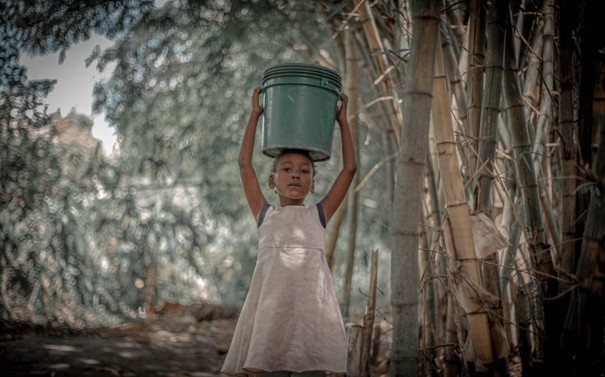
© Michael Gushaha
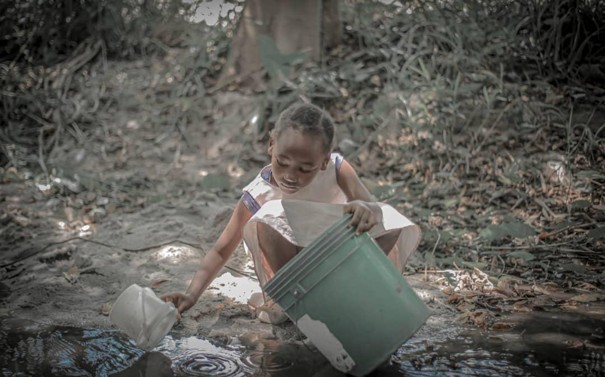
© Michael Gushaha
Clean water in a hospital
Water is used continuously in a hospital. For drinking and cooking, but also for cleaning, hygiene, wound care and the safe execution of medical procedures.
The World Health Organization emphasizes that safe drinking water and good sanitation are essential to prevent disease and infections. Contaminated water can, among other things, contribute to diarrhea, typhoid fever, cholera, and other infectious diseases. Young children and people with weakened immune systems are particularly vulnerable.
For a hospital like St. Mary’s in Kibara, a reliable water supply is therefore much more than just a practical facility. It is part of the foundation on which good and safe care is built.
Living by Lake Victoria
Kibara is beautifully situated on Lake Victoria. The lake is indispensable for many people in the region. It provides water, fish, transportation, and income.
At the same time, life around such a large freshwater lake brings health risks. One of them is schistosomiasis, Previously called bilharzia.
Schistosomiasis is a parasitic disease. People can become infected when they come into contact with freshwater containing larvae of the parasite. These larvae are spread by certain freshwater snails and can enter the body through the skin. The disease is common in areas where safe water and good sanitation are lacking.
It is precisely the area around Lake Victoria that in Tanzania is one of the areas where schistosomiasis is common. The Tanzanian health authorities cite limited access to safe water and inadequate sanitation as important factors in the continued infection and re-infection.
In children, prolonged infection can lead to anemia, growth retardation, and reduced learning performance. In chronic disease, organs can also be affected.
Clean water alone does not completely eradicate schistosomiasis. Treatment, sanitation, education, and limiting contact with contaminated water are also important. But access to safe water is an important part of a broader approach.
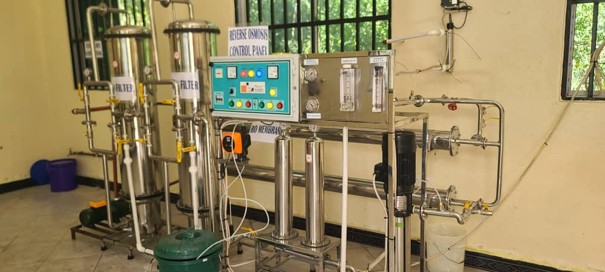
Photo: During the working visit in India, various techniques and installations for water treatment were examined
Looking to the future
Father Mapendo’s working visit to India fits into a broader development that we are seeing in Kibara: step by step, we are looking at what is needed to further improve the quality of care.
At the moment, there is no finalized water project for Stichting Koroboi. First, it is necessary to thoroughly examine what is needed and technically feasible in Kibara, what existing facilities can be used, and what investment is appropriate.
Nevertheless, we believe this is a subject that deserves special attention.
After all, a good water supply cannot only be of significance for the hospital itself. In the long term, it may also be considered in terms of the significance for facilities and residents in the surrounding area.
That makes clean water a particularly important topic: it touches on healthcare, prevention, and the living conditions of the community surrounding the hospital.
Therefore, we continue to follow with interest the possibilities that the diocese and St. Mary’s Hospital are exploring further. Perhaps a new project could emerge here in the future in which the Koroboi Foundation could contribute.
As so often, this too does not begin with a big step, but with observing, learning, and jointly exploring what is truly necessary.
Step by step, we are working towards better and more sustainable healthcare for Kibara and the surrounding area.
Sources and more information
- World Health Organization (WHO) – Drinking water
- World Health Organization (WHO) – Schistosomiasis
- Tanzania NTD Master Plan 2021–2026
 English (UK)
 Nederlands
 Kiswahili